Bee Aware ! by Stacy Tuttle
When I’m designing a garden I meet with my clients to discuss their wishes and requirements. I like to include plants for all year round colour or interest in my designs and also plants to encourage wildlife- birds, bees, butterflies etc. My own garden has a lot of wildlife residing in it – frogs and newts in the pond, so many birds with babies this year, even a little vole who is residing in our compost bin. And we have bee friendly planting and bee habitats.
Bees in particular are lovely to observe in the garden but they also play a vital role in our ecology. They are the main pollinators of our crops whether in the fields or in our gardens. They travel up to a mile in search of food. Sadly though, their numbers are in decline due to the changes in farming practices which mean that around 97% of wildflower grasslands have been lost since the start of the 20th century. A single queen bee can need nectar from up to 6,000 flowers a day to provide enough heat to keep her eggs warm in her nest. So what to do? While we can’t individually change the farming landscape we can do our bit by making our gardens as bee friendly as possible.
Buy a pack of wild flower seeds and if you have the space, have a special area dedicated to a natural garden with wildflowers and long grass. If not sow the wildflower seeds in a window box or pot.
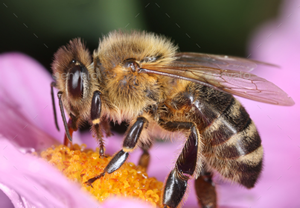 When people think of a wildlife garden they often have an impression of an untidy mess- unkempt with stinging nettles- but it is possible for the domestic garden to encourage wildlife without shouting out about it. All it takes is some careful thinking when you are planting your garden and choose plants which will provide a source of nectar for bees to give a continuous supply from early spring right through to autumn. It is important to choose varieties which are single flowered rather than the more ruffled double varieties which bees find difficult to access. For example Hellebore and Viburnum in the winter; Apple trees, Bergenia and Primulas in the spring;Alliums, Borage, Verbena bonariensis and Campanulas in the summer. In autumn there is the Caryopteris, Echinacea, Dahlias and Salvias. If you want to know more about plants which are suitable for a bee friendly garden there are several sites online which give suggestions. One of my favourites is the RHS Plant for Pollinators list for both garden plants and wild plants which you can download. It has a surprisingly wide choice of plants to pick from, sun lovers and plants which grow well in shade.
Bees can see in colour and are particularly attracted to flowers which are blues, lavenders, mauves and purples but they also like white and yellow flowers.
One of the steps which has most impact is to garden organically. Stop using pesticides and use natural, organic remedies for pests. Provide houses and nesting sites for bees. For the bumble bee home is a burrow or hole in the ground. We can help by providing suitable habitat for them. Leave patches of bare earth for bumble bees or create little holes for solitary bees. This could be anything from an elaborate bug hotel to a simple terracotta pot or tube filled with pieces of garden cane.
Together we can look after our bees.